
Do's and Don'ts when helping a smoker quit.
Do respect that the quitter is in charge. This is their lifestyle change and their challenge, not yours.
Do ask the person whether he or she wants you to ask regularly how he or she is doing. Let the person know that it's OK to talk to you whenever he or she needs to hear encouraging words.
Do help the quitter get what she or he needs, such as hard candy to suck on, straws to chew on, and fresh veggies cut up and kept in the refrigerator.
Do spend time doing things with the quitter to keep his or her mind off smoking -- go to the movies, take a walk to get past a craving (what many call a "nicotine fit"), or take a bike ride together.
Do try to see it from the smoker's point of view -- a smoker's habit may feel like an old friend that has always been there when times were tough. It's hard to give that up.
Do make your home smoke free, meaning that no one can smoke in any part of the house. Remove lighters and ash trays from your home.
Do help the quitter with a few chores, some child care, cooking -- whatever will help lighten the stress of quitting.
Do celebrate along the way. Quitting smoking is a BIG DEAL!
Don't doubt the smoker's ability to quit. Your faith in them reminds them they can do it.
Don't judge, nag, preach, tease, or scold. This may make the smoker feel worse about him or herself. You don't want your loved one to turn to a cigarette to soothe hurt feelings.
Don't take the quitter's grumpiness personally during his or her nicotine withdrawal. The symptoms usually pass in about 2 weeks.
Don't offer advice. Just ask how you can help with the plan or program they are using.
If your ex-smoker "slips"
Don't assume that he or she will start back smoking like before. A "slip" (taking a puff or smoking a cigarette or two) is pretty common when a person is quitting.
Do remind the quitter how long he or she went without a cigarette before the slip.
Do help the quitter remember all the reasons he or she wanted to quit, and forget about the slip as soon as possible.
Don't scold, tease, nag, or make the quitter feel guilty. Be sure the quitter knows that you care about him or her whether or not he or she smokes.
If your quitter relapses
Research shows that most people try to quit smoking several times before they succeed. (It's called a relapse when smokers go back to smoking like they were before they tried to quit.) If a relapse happens, think of it as practice for the time he or she will succeed. Don't give up your efforts to encourage and support your loved one. If the person you care about fails to quit or starts smoking again:
Do praise him or her for trying to quit, and for whatever length of time (days, weeks, or months) of not smoking.
Do encourage him or her to try again. Don't say, "If you try again..." Say, "When you try again..." Studies show that most people who don't succeed in quitting are ready to try again in the near future.
Do encourage him or her to learn from the attempt. Things a person learns from a failed attempt to quit may help him or her quit for good next time. It takes time and skills to learn to be a non-smoker.
Do say, "It's normal to not succeed the first few times you try to quit. Most people understand this, and know that they have to try to quit again. You didn't smoke for (length of time) this time. Now you know you can do that much. You can get even further next time."
Tuesday, March 29, 2011
Helping A Smoker Quit
Thursday, March 17, 2011
Breast Cancer Treatment and Excercise

If you're going through breast cancer treatment, exercise may be one of the last things on your mind, but studies show that staying active during treatment can help ward off some common side effects of treatment, such as fatigue. Working out regularly also has profound benefits in quality-of-life post-treatment. A collaboration between the American Cancer Society in New England and Miriam Hospital in Providence, Rhode Island, is looking at just how much of a difference exercise can make.
Called Moving Forward Together 2, the study pairs American Cancer Society Reach To Recovery volunteers with current breast cancer patients in a 12-week telephone-based counseling program that promotes exercise. Reach To Recovery volunteers are breast cancer survivors who are specially-trained to provide emotional support and guidance to newly diagnosed breast cancer patients. This program adds exercise motivation to the equation.
The study has two arms: one group will be offered educational information about the benefits of exercise in addition to traditional Reach To Recovery services; the other will engage in moderate-intensity physical activity as well. Survivors reach out to patients by phone.
Reach To Recovery volunteer, Sally Scanlon, is among the women taking part. Scanlon, a 10-year stage II breast cancer survivor, says she saw a "huge benefit" from upping her physical activity after her own diagnosis. She's seen other women find similar benefits through exercise.
"The woman I was counseling was going through some difficult family situations on top of going through treatment. While she was waiting for her mother at the nursing home, she would get on the treadmill. You could just see what a stress release exercising had become for her," Scanlon says.
Participating in the program has also helped Scanlon keep her own exercise program on track.
"I thought, 'She's exercising, and she's going through chemo!'", Scanlon says.
Wednesday, March 9, 2011
Cancer Survivor Serves Community

Dorothea Amey of Moorpark leads an active life. Married and having raised two sons, she was a public school teacher and later an educator with the Seventh-day Adventist Church and a missionary in Zimbabwe and Zambia. In retirement, she is still active with the Camarillo Adventist church and works in “the Pantry,” the church’s outreach arm to those who need food and household items when times are tough.
Amey also was diagnosed with pancreatic cancer. She’s an eight-year survivor.
“I was working at Pacific Union College in Napa Valley and one day I became jaundiced and kind of itchy,” said Amey, now 66. “I went to the hospital and they thought it was hepatitis,” she said. Further tests revealed the cancer.
“We knew that most people don’t survive more than six months,” Amey said. “But I believe that good medicine and my faith in the Lord, has sustained me,” she said. “I’m a happy person and truly I don’t think about cancer every day. I garden and I do my own housework. I live my life.”
Amey underwent a complex and life-altering surgery called a “Whipple” and went through chemotherapy. The Whipple procedure is the most common surgery for pancreatic cancer and involves removal of the head of the pancreas, a portion of the bile duct, the gallbladder, and the duodenum.
Amey’s life is filled with opportunities to serve and she says that’s what drives her. “I’ve been all over the world and I’ve seen so many things,” she said. “That has given me a lot of peace.”
As of three years ago, her doctor has found no cancer in Amey’s body. “Dr. (William) Isacoff at UCLA is a leader in this field, in pancreatic cancer. He gives people hope when many don’t have it,” said Amey.
In January, Isacoff told Amey she no longer needed chemotherapy, though she’ll continue to have blood tests and scans because pancreatic cancer is always in the blood stream. It can show up at any time.
“Chemo is no walk in the park,” said Amey’s husband, Gene. “It wears her down, but she does OK.”
Amey also talks to patients at UCLA’s hospital and takes phone calls from around the nation from cancer patients, offering words of encouragement. “I’m certainly focused on my faith walk, but I don’t push that on people. They’re so fearful, they just need someone to relate to and I do that,” Amey said.
It is her work with the pantry that Amey loves most.
“I consider myself a cheerleader for the group,” Amey said. “We have between 300 and 400 people that are fed each week. It’s one of the most rewarding things I’ve ever done,” she said. “With the economy as it is, it’s been very busy, but we have our successes, too.”
Amey teared up as she described one woman who was living in her car and came to the pantry.
“She came in one day to tell us she didn’t need us anymore, that she had an apartment and a job and she left some money with us as a donation,” said Amey. “It was incredible.”
“When (Amey) comes in, she does whatever needs to be done,” said Milly Johnson, director of the pantry. “As a missionary, she learned to dig in and do the hard work. It’s in her personality. It’s part of her makeup.”
“She’s been on an amazing journey,” said Pastor Dennis Stirewalt of Camarillo Seventh-day Adventist Church. “She’s a fighter and a lady of real grace.
Friday, February 18, 2011
Sharon Cohrs - Climbing For A Cause

The American Cancer Society is proud to hold more than 5,100 Relay For Life events in the United States and in 19 countries around the world. Sharon Cohrs of Australia is just one inspirational survivor that’s part of the International Relay For Life movement.
Sharon and her husband are avid mountain climbers, and in 2007 they were preparing to climb Aconcagua, a 22,841 foot tall peak in South America, the highest mountain outside of Asia, when Sharon found a pea-sized lump in her left breast. After a biopsy and days of waiting, she learned she had breast cancer. “Instead of embarking on an amazing adventure with my husband doing what we love, I was undergoing surgery and chemotherapy treatment,” she says.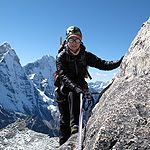
Sharon had climbed several soaring mountains in the past 4 years, but this time she was scaling a different kind of mountain. Taking “one step at a time,” she remained focused, positive, and determined to beat breast cancer.
Now she is “Climbing for a Cause” in an effort to raise $250,000 for cancer research and to bring awareness to the disease. With a goal of being the first breast cancer survivor in the world to reach the summit of Mount Everest, Sharon climbed Ama Dablam in Nepal in October 2009 and is climbing Mount Kilimanjaro in Tanzania and Cho Oyu in Nepal this year. When Sharon reaches the peak of each mountain, she showcases her Relay For Life pride by putting on her Relay shirt and taking a photo with her homemade banner saying, “Survivors can conquer mountains.”
Sharon’s story is an incredible message of hope. Will you share yours as well to motivate survivors worldwide to keep up the fight? Use this form to submit your message of hope and encouragement to cancer survivors across the globe, then encourage friends and family to do the same. Help us gather 1,000 messages of hope by the end of February! The more messages we have, the stronger our collective voice will be.
Sunday, February 13, 2011
Your Donations At Work

One of the most frequently asked questions of those who are fund raising for Relay For Life is, "Where does my money go". Here is some information that will help you answer this very important question. These are just a few examples of how the contributions you raise make a difference in the American Cancer Society’s lifesaving mission.
Helping people stay well
* Our telephone counseling service, the American Cancer Society Quitline®, doubles a person’s chances of quitting tobacco for good.
* We develop guidelines for recommended cancer screenings and nutrition and physical activity, so people know what tests they need to find cancer early and how to help prevent the disease.
* We provide tips, tools, and online resources to help people set goals and stay motivated to eat healthy and maintain an active lifestyle.
Helping people get well
* Our phone lines are open every minute of every day and night to help connect people with the answers they need. Each year, we provide information, help, and support to the nearly one million individuals who call us at 1-800-227-2345. In addition, our Web site, cancer.org, offers access to the latest information and news on cancer and helps people locate programs and services in their area.
* We offer an online support community for cancer survivors and caregivers to share stories and find support.
* We assist cancer patients in need with getting transportation to and from their treatments and offer help with free lodging for cancer patients and their caregivers.
* Through our clinical trials matching service, we connect patients with thousands of different treatment options.
* With sites at hospitals and treatment centers across the country, our American Cancer Society Patient Navigator Program provides one-on-one guidance to people facing cancer through every step of their journey.
Finding cures
* We’ve had a hand in nearly every major cancer breakthrough of the last century, including confirming the link between cigarette smoking and lung cancer, establishing the link between obesity and multiple cancers, developing drugs to treat leukemia and advanced breast cancer, and showing that mammography is the most effective way to detect breast cancer.
* We’re the largest private funder of cancer research in the United States.
* We fund researchers with cutting-edge ideas, often early in their careers. Of the researchers chosen for Society funding, 44 have gone on to win the Nobel Prize, the highest honor in scientific achievement.
Fighting back
* The majority of Americans are now covered by a smoke-free law, thanks in part to the efforts of the Society and our nonpartisan advocacy affiliate, the American Cancer Society Cancer Action Network (ACS CAN).
* We help mobilize communities to fight back against cancer with events such as Relay For Life and Making Strides Against Breast Cancer®
* We have helped uninsured, underinsured, and low-income women get breast and cervical cancer screening tests and follow-up treatment since 1991 and, along with ACS CAN, we have successfully fought for legislation protecting this care.
* By supporting Relay For Life, you help make the American Cancer Society’s mission possible, and that helps us all move closer to our ultimate goal: a world with less cancer and more birthdays.
For more information about programs and services of the American Cancer Society, please visit www.cancer.org or call 1.800.227.2345 24 hours a day, 7 days a week.
Wednesday, February 2, 2011
Miracle Cures

Miraculous cancer cure!" shouts the headline. "My cancer is completely gone!" says a woman in the testimonial. "One pill can guarantee better health!" claims the email. A quick and easy cure for cancer is the heartfelt wish of people facing the disease and of doctors and researchers who are working to treat it. Too often, though, ads and offers that promote "miracle" cures do not deliver as promised. In fact, some treatments can actually be harmful to a person's health. So how can you tell if a particular treatment is the next big thing or a potential hoax?
The first thing to consider is whether the treatment falls into the category of complementary medicine or alternative medicine. Complementary medicine is a form of treatment used along with mainstream medical care. For example, some people find that activities such as aromatherapy, massage, meditation, or yoga are useful in controlling symptoms. These methods do not treat the cancer, but if they are chosen carefully and used properly, they can help improve your quality of life. Alternative medicine is just the opposite: a treatment used instead of standard or mainstream medical treatment. Alternative medical treatments, although they may seem promising, often have not been scientifically tested or proven to work. Patients who choose these treatments may sometimes give up or delay the use of proven treatments, and that can give cancer more time to grow and pose a dangerous health risk.
The next thing to think about is if the treatment follows some of the common characteristics you might find in a questionable or fraudulent treatment claim. For example, is the treatment or drug a secret, or is it or only offered by one person or clinic? Once a treatment is found to be helpful, it will often be used by other qualified professionals, not just one doctor. Does the article or information offer personal stories of amazing results, but no actual scientific evidence? Again, without research and testing, it's hard to know if a treatment truly works. Does the treatment promise a cure for all cancers or other serious illnesses, such as AIDS, chronic fatigue, or multiple sclerosis? These illnesses are complicated, and claims promising a single cure for all are almost certain to be false.
Last but not least, do your own research. If you're considering alternative or complementary treatments, learn about new treatments from respected sources you can trust, and work to uncover the potential benefits and risks. Then, talk to your health care professionals about any treatment you are considering. The decision to use an alternative or complementary treatment should not be taken lightly, and being well-armed against false claims could not only save you time and money, but it could also save your life.
Sunday, January 2, 2011
Breast Cancer Risk Assessment

A new study reconfirms something often forgotten by women and sometimes even by doctors: just because breast cancer has not struck a family before does not mean family members are safe from the disease.
Researchers tracking more than 6,000 women for up to six years found that most cases of breast cancer occurred in those without a family history of the disease, although many of the women had other known risk factors that can help predict an individual woman's likelihood of developing the disease.
Breast cancer accounts for about a quarter of all cancers in women, with nearly 200,000 new cases of invasive breast cancer -- disease that has spread beyond the milk ducts or milk-making glands -- diagnosed in the U.S. every year.
"I have newly-diagnosed breast cancer patients ask me all the time how they could have developed the disease since they did not have a family history," researcher Dr. Lawrence Wickerham of the National Surgical Adjuvant Breast and Bowel Project (NSABP) Allegheny Center, in Pittsburgh, told Reuters Health in an e-mail.
Prior studies have shown that more than 70 percent of primary care doctors ask women about their family histories, while less than half collect information on other known risk factors such as whether a woman's period began before age 12 - which raises risk - or whether she has given birth, which lowers risk.
Wickerham, along with lead researcher Angelina Sontag, of Eli Lilly and Company, and their colleagues analyzed the roles of various risk factors among 6,322 postmenopausal women who had participated in two large trials of osteoporosis medications. (Eli Lilly and Company, a maker of breast cancer treatments, also funded the current study.)
At the time of each trial, all of the women were under 86 years old and none had received a previous diagnosis of breast cancer.
The team used the Breast Cancer Risk Assessment Tool (http://www.cancer.gov/bcrisktool), an online questionnaire developed by NSABP and the National Cancer Institute, to go back in time and predict the odds that the women would develop invasive disease over the next five years.
The risk calculator incorporates age of first menstruation, current age, ethnicity, reproductive history, prior breast biopsies and family history. Its score, on a scale of zero to eight, represents a woman's five-year risk as a percentage.
Some 600 women in the study group -- approximately one in ten -- had a family history of breast cancer and nearly all of these met the predictive tool's definition of high risk: a score of 1.66 percent or above.
More than half of the remaining women without family histories of breast cancer also fit into the high-risk category, however.
A total of 92 women, or 1.5 percent of the study population, went on to develop invasive breast cancer over an average follow-up period of 4 to 6 years. As expected, the actual rate of breast cancers increased with the predicted risks, as well as in the presence of a family history.
Nevertheless, more of the total number of breast cancer cases ended up being reported in women with predictions below the high-risk cut-off or without a family history.
Close to half (40) of the women who developed the disease received a risk score below 1.66 percent, for example, and nearly two of every three (60) diagnosed women had been assigned risks between 1 and 2 percent and had no family history of breast cancer.
"The single largest risk factor for developing a breast cancer is being a woman and the second largest is being a women over 50," said Wickerham. "However, there are some women who are at greater than average risk, particularly those with a family history."
The most common known risk factors found in the study population were being at least 65 years old and beginning menstruation before the age of 12, report the researchers in the journal Menopause.
"Physicians and other health care providers should consider using methods beyond asking about family history to access breast cancer risk," added Wickerham, alluding to the Breast Cancer Risk Assessment Tool. "Such efforts can help better identify women at increased risk and can better focus screening and prevention strategies for them."


 Posts
Posts


