Saturday, September 29, 2012

The Most Effective Breast Cancer-Fighting Organization in the World

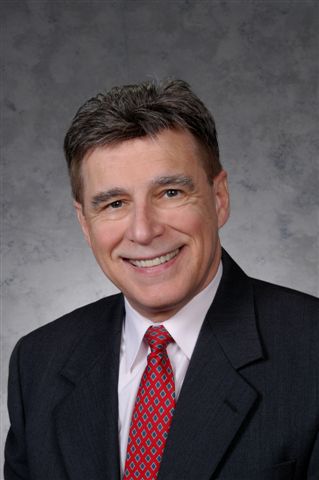
Written by W. Phil Evans, M.D., F.A.C.R., the director of the Center for Breast Care at the University of Texas Southwestern Medical Center. 

As a radiologist specializing in breast imaging and an American Cancer Society volunteer for many years, I have a unique perspective on life-saving early detection with mammography and the extraordinary role of the Society in breast cancer care. Over the years, I have had to tell many women that they have breast cancer, and the Society has always been there for them. Today, one of every two women newly diagnosed with breast cancer reaches out to the Society for help and support. In every community, we provide free information and services–when and where it’s needed.

Doctors know that when found early rather than late, breast cancer is much easier to treat, and the chance of survival is significantly greater. The Society has helped translate this knowledge into action that has improved and saved many lives by increasing public awareness of breast cancer, developing screening guidelines, and providing clinician education programs. For years, the Society has recommended that women begin screening at age 40 with yearly mammography and clinical breast exam.  Largely due to screening and improved treatments, the breast cancer death rate has decreased by over 30% since 1990 and will approach a 40% reduction by 2015.

Although screening mammography is very effective in reducing breast cancer deaths, it does have limitations. Mammography detects most but not all breast cancers early.  A clinical examination and breast awareness are part of the screening process for women at average breast cancer risk.  If you have a strong family history of breast and/or ovarian cancer, genetic testing may be appropriate to determine if you have a gene mutation that places you and possibly a member of your family at a higher risk of developing breast cancer.  Additional imaging with ultrasound and/or MRI in addition to mammography may be recommended for those at high risk.

While we do not yet know how to prevent breast cancer, research supported by the Society suggests how a woman may reduce her breast cancer risk by:
  • Maintaining a healthy body weight throughout life,
  • Engaging in moderate to vigorous physical activity, and
  • Reducing alcohol intake to no more than one drink per day.
For women diagnosed with breast cancer, the Society is ready to help around the clock in communities nationwide. The National Cancer Information Center (1-800-227-2345 or cancer.org) is staffed 24/7 with specialists who answer calls and e-mails and monitor chat room discussions.  They assist patients and caregivers with information requests and service referrals.  We provide emotional support for the newly diagnosed both in person and online, transportation assistance to and from treatment, free lodging if treatment is far from home, free wigs and help with treatment-related side effects, and tips, tools, and resources for nutritional needs during treatment, recovery, and survivorship.

The Society passionately fights back against breast cancer through Making Strides Against Breast Cancer –the largest network of breast cancer events in the nation, uniting more than 270 communities to fund the fight. The walks are 3-5 miles and the walkers raised more than $60 million last year to find cures and save lives. In addition, through the American Cancer Society Cancer Action Network (ACS CAN), our nonprofit, nonpartisan, advocacy affiliate, breast cancer remains a top priority for our nation’s lawmakers. Through ACS CAN, we support federal legislation that will increase access to treatment for breast cancer patients and quality of life for survivors. Moreover, ACS CAN has lobbied Congress for continued support the National Breast and Cervical Cancer Early Detection Program (NBCCEDP). This program helps low income, uninsured, and underinsured women obtain access to screening and treatment and has provided over 10 million screening exams to four million women, finding more than 52,000 breast cancers. Finally, ACS CAN urges Congress to robustly fund breast cancer research that will improve prevention, detection, treatment, and survivorship.

The American Cancer Society has played a role in nearly every major breast cancer breakthrough in recent history and will continue the work until the disease is defeated.

Thursday, September 27, 2012

Local Relay Leaders Attend Leadership Summit

 Article published in the September 27, 2012 issue of The Mena Star

Relay Cheerleaders

The American Cancer Society held the Mid-South Division Relay For Life Leadership Summit September 21st and 22nd at the Opryland Hotel in Nashville, Arkansas.  Four members of the Relay For Life of Polk County committee attended the Summit; Richie and Regina Lawry, Crystal Mos, and Debbie Welch.  The purpose of the Summit was to inspire hope, courage, and determination in the fight to eliminate cancer. If there is one word that defines Relay For Life it is "hope".
The Relay For Life Leadership Summit welcomed over 1,200 volunteers from Arkansas, Louisiana, Mississippi, Alabama, Tennessee and Kentucky.  The theme of the Summit was Dream Big - Hope Big - Relay Big.  Cancer is a BIG foe.  To defeat it we are going to have to Dream BIG, Hope BIG and Relay BIG.  In 2011, Arkansas held 71 Relay For Life events with 1,534 teams and 2,990 cancer survivors participating. Arkansas Relayers are looking for bigger things in 2013. 
Relay For Life represents the hope that those lost to cancer will never be forgotten, that those who face cancer will be supported, and that one day cancer will be eliminated.  Relay For Life is more than just a fundraiser. It’s a life-changing experience. At Relay, every person in the community has a chance to celebrate, remember, and fight back. And every person who participates joins others around the globe as part of this worldwide movement to end cancer.
The Relay For Life of Polk County attendees came back determined to dream big, hope big and Relay big.  If you would like to be a part of something big, call Regina Lawry at 479-234-1608.

Thursday, May 31, 2012

Lawry Continues Commitment to Relay For Life

Lawry continues commitment to Relay For Life, receives recognition

By Scarlett Thompson 
American Cancer Society

Published in a supplement to The Mena Star - May 24,2012 


Regina Lawry of Arkansas started volunteering for the American Cancer Society at an early age, when her mother would go around their neighborhood collecting money for the organization. “She told me you just never know who it might help,” says Lawry.
                 
Turns out, the money collected by Lawry and her mother may have helped their own family.  Regina’s mother would eventually battle leukemia and her father faced colon cancer.  Three of her sisters were diagnosed with breast cancer.  Her brother fought skin cancer.  Regina is the only one of her immediate family to not get a diagnosis.  “I feel like I live my life waiting for the other shoe to drop,” says Lawry, who manages a credit union in the town of Mena.
               
That’s why Lawry still volunteers for the American Cancer Society.  She says she knows first-hand that research is critical, by again, watching her mother. “During her treatments she participated in a bone marrow study.  At that time they told her it was very painful and would not help her but the research would help someone else down the line,” says Lawry.  “Twenty years later a bone marrow transplant saved my sister Lenora’s life.”


The American Cancer Society helped fund the development of the bone marrow transplant.  That procedure helped Lawry’s sister live 13 years more until the cancer returned.  Lawry cared for Lenora during that time, which included helping her get to sessions of the American Cancer Society’s Look Good…Feel Better program.  It helps women who are undergoing treatment deal with skin and hair changes, offering them free wigs and tips on how to apply makeup.  “Lenora put her face on every morning before we left the house for her bone marrow treatments.  She said she had to have a little dignity,” says Lawry.


Meantime, one of Lawry’s other sisters was battling breast cancer too.  It was her sister Roberta who introduced Lawry to the American Cancer Society’s Relay For Life, an event where participants form teams to raise money for patient programs, research and much more.  Survivors are celebrated, those lost to cancer are remembered and every one at the event gets a chance to fight back against the disease through Relay.  “When I watched my four siblings walk around the track arm in arm during the Survivor’s Lap and then saw my mother’s name and my father’s name on luminary bags, I knew this was something I had to get involved in,” says Lawry.
                 
Since then, Lawry has been involved in her local Relay For Life event, and representing her community as a Hero of Hope.  It’s an opportunity for her to travel and share with others the impact of the American Cancer Society. “I know the American Cancer Society makes a difference.  I’ve seen it in my own family,” says Lawry.  “The American Cancer Society funded research that helped develop treatments for leukemia, Tamoxifen and many other drugs.”


Lawry says she’ll keep taking part in Relay, not only for the future but for someone in her past. “I show my mother’s luminary to my granddaughters and think how proud she would have been of us all and if only those ground breaking treatments for leukemia would have come just a few years earlier.  I relay for my granddaughters so that if they ever get cancer there is a treatment to save their life,” says Lawry.


Wednesday, May 30, 2012

Relay For Life makes a difference in community

Polk County Relay For Life makes a difference in community, for research
by Andy Philpot

Published in the May 24, 2012 issue of The Mena Star


As Relay For Life is now a well established tradition in Polk County, it serves many more purposes that meets the eye.  Co-chairs of the local Relay For Life, Regina and Richie Lawry, can tell you that while the event itself is one weekend of the year, the efforts are a year -round effort.  This year-round effort that the Lawrys have instilled into making Relay For Life as successful as possible in our communities, the same commitment is followed by a number of organizations, businesses, and individuals, who seek to raise as much money as possible for Relay For Life.  This money in turn goes toward cancer research, which in turn leads to more treatments of the many cancers our friends and family encounter, which in turn leads to many more birthdays and reasons to celebrate.

Last year Polk County Relay For Life raised 66,000, which combined with the rest of the Relay For life events that took place in Arkansas, a total of $4.5 million was raised by Relay For Life events across the state in 2011.  This total gets combined with all the other Relay For Life events that take place nation-wide, all of which are raised for the American Cancer Society to use toward cancer research.  With the ultimate goal of one day eliminating the words "You Have Cancer" being spoken by doctors, it takes a collective effort to reach this goal.

                                         Keisha Pittman

Helping to emphasize the significance of every dollar that is raised in community Relays, two different testimonies were shared at this year's Polk County Relay For Life.  Keisha Pittman, from Arkadelphia, shared her cancer battle testimony during the opening ceremonies of this year's Relay, and emphasized that every dollar amount is important toward the shared goal of defeating cancer.  She spoke how community Relay For Life events in both big cities and smaller towns are all invaluable because they all go toward the common goal.  The funds of Relay For Life are what helps make continued research and advancements in cancer treatments possible.

                                Deidra Porter

Deidra Porter, of Conway, shared her testimony just before the Luminaria ceremony, and how her cancer experience has her that much more an advocate for Relay For Life events throuought the devoted communities.  Porter was diagnosed with cancer, and moments before she was to begin her first treatment, she learned she was pregnant.  Like Pittman, Porter's testimony was both emotional and inspirational.  Porter not only endured cancer and now can share her story with others, but she also has a healthy son that has endured the treatments.  Sharing the exact sentiment of Pittman, Porter praised Relay For Life and how every dollar raised in important to the overall goal of seeking an end to cancer.

Pittman and Porter traveled to Mena to share their testimonies with the Polk County Relay For Life participants, and their stories are added to the always growing list of cancer survivors that do hear the words "You Have Cancer", but endure the battle and can proudly wear a purple shirt as they walk the Survivors Lap.


Relay For Life is held for the purpose of celebrating the survivors, remembering those we have lost, and giving hope that one day the world may be cancer free.  Through the celebrating and remembering, the success gets passed along to the American Cancer society through the fundraising that happens all year long.  With each Relay For life that takes place, it adds to the overall funding that can be used toward cancer research and treatments.

                                          Gordy Klatt

Relay For Life has been raising money for the American Cancer Society since 1985, when Gordy Klatt came up with a way to raise funds for his local American Cancer Society office in Tacoma, Washington, and show support of all his patients who had battled cancer.  He did this by spending 24 hours circling the track at Baker Stadium at the University of Puget Sound.  He ran more than 83 miles and his efforts raised $27,000 to fight cancer.  It has only gotten bigger and better from there.


Wednesday, November 30, 2011

Study Supports Mammograms for Women in Their 40's


Women in their 40s with no family history of breast cancer are just as likely to develop invasive breast cancer as women whose mother or sister has had the disease, according to a new study.
These preliminary findings support a recommendation for all women 40 to 49 to get annual mammograms, not just those with a family history of breast cancer, said Dr. Stamatia V. Destounis, a Rochester, N.Y., radiologist. Women with no family history are typically considered low-risk.
Destounis evaluated cancer patients who were seen from 2000 to 2010 at the Elizabeth Wende Breast Care facility, where she is a managing partner.
"Invasive cancer [cancer that spread to the lymph nodes] was diagnosed in 64 percent of patients without family history and 63 percent with," she said.
She is scheduled to present her findings Tuesday at the annual meeting of the Radiological Society of North America in Chicago.
During the decade studied, 373 women 40 to 49 years old were diagnosed with breast cancer after mammography screening at the center. Of the nearly 40 percent who had a family history (meaning a primary relative with the disease), 63.2 percent had invasive breast cancer, while in the no-family-history group, 64 percent of the patients had invasive disease. (Of those without a family history, 16 had a personal history of breast cancer.)
When the researchers looked at the cancers' aggressiveness, they found 29 percent of cancers in women without a family history and 31 percent of those with a family history had spread to the lymph nodes.
While some experts agree with Destounis that annual mammograms should begin at 40, others do not. The American Cancer Society recommends annual screening with mammograms for women starting at age 40. However, the U.S. Preventive Services Task Force recommends women 40 to 49 discuss screening with their doctor and then decide. The Canadian Task Force on Preventive Health Care earlier this month recommended that women age 40 to 49 at average risk not get routine mammograms.
 "I don't see that this study helps inform a woman about whether she should start mammograms at age 40 or at age 50," said Dr. Michael LeFevre, co-vice-chair of the U.S. Preventive Services Task Force. One limitation of the study is that it was conducted at a single facility, a limitation that Destounis acknowledges. However, she said the women are ethnically diverse and from all income levels.
The study finding, LeFevre said, ''doesn't say anything about the probability of a woman dying in her 40s."
LeFevre also pointed out that "having an aunt die of breast cancer at age 85 is not the same as having a mother or sister with breast cancer at 42," when it comes to family history. When a woman discusses with her doctor when she should begin mammograms, LeFevre said that discussion should definitely include details about family history.

Wednesday, November 23, 2011

Lawry Named Hero of Hope

 Article in the November 23, 2001 edition of The Mena Star


Lawry Named as Hero of Hope by American Cancer Society


MENA, Ark. – The American Cancer Society’s Mid-South Division recently named Regina Lawry as a “Hero of Hope.” Lawry is one of 20 cancer survivors and caregivers from the Mid-South states of Alabama, Arkansas, Kentucky, Louisiana, Mississippi and Tennessee to be recognized.


Lawry is a cancer caregiver, having lost many relatives to cancer, including her mother and sister. She is a long time Relay For Life volunteer, and currently serves on the Relay For Life State Leadership Council.

The Heroes of Hope program is in its fourth year. Honorees will serve as spokespeople for the American Cancer Society in their communities. Those selected have triumphed over cancer, made significant volunteer contributions to the American Cancer Society, and made an impact in the lives of others.

“The Heroes of Hope program provides a highly visible symbol of personal victory over the disease, as well as encourages support and participation in the programs of the Society,” says Keisha Pittman, an American Cancer Society 2010 Hero of Hope and co-chair of the 2011 Heroes of Hope program.

The Heroes of Hope represent the courageous struggle of all cancer patients and their caregivers as they deal with the physical and emotional aspects of the cancer experience.

“Hearing their stories makes a statement that progress is being made in cancer research and prevention, and that there is hope for the future for people who are diagnosed,” added Lee Adkins, co-chair of the 2011 Heroes of Hope program, and a 2010 Hero of Hope.
               
The American Cancer Society saves lives and creates more birthdays by helping people stay well, by helping people get well, by finding cures and by fighting back. For more information, contact the American Cancer Society at 1-800-227-2345 or visit online at cancer.org.

Monday, October 24, 2011

Susan Niebur - Atrophysicist, Survivor, and Mom

Guest blog from Susan Niebur. Susan is a four time cancer survivor, astrophysicist, and mom of two happy little 4 and 6 year old boys. Susan is now fighting metastatic breast cancer in her spine, neck, ribs, and hips, with chemo and pain meds, still looking for that "new normal."

_______________________________________

I am alive today because of research funded by organizations like the American Cancer Society and the federal government.

I was diagnosed with inflammatory breast cancer in June 2007. I had a year of chemotherapy, surgery, and radiation, all developed by really smart researchers funded through the efforts of men and women like you. The treatments worked, and I have *lived* for 4.5 years while my babies grew up and went to school. I am grateful, so grateful, for that.

But the cancer came back. Now, like 150,000 other women and men in America, I am living with metastatic disease. Metastatic breast cancer, as some of you know all too well, is when the cancer moves away from the breast and recurs in the lungs, the liver, and other vital organs.

Now, I’m going to let you in on a dirty little secret: No one dies of breast cancer confined to their breast. Some of us die from treatment, but most of us die when the cancer has moved to our vital organs and shut them down. We die of metastatic disease. There are treatments we can try, but there is no cure.

When I was diagnosed with metastatic breast cancer this year, I was reassured that there were 20 chemotherapy drugs that we could try. We tried one. It worked, for a while. Then it stopped working. Three of the 20 drugs are in short supply right now, so I can’t have those. There are sixteen drugs left.

I will be on chemotherapy once a week, for the rest of my life. That is, until we’re out of drugs that work. That is why I believe we need more research. All of us with metastatic disease — and the 30% of women whose breast cancer will spread and become metastatic — will die without more research.

Oh, and — Research on metastatic disease is woefully underfunded, at just 3% of all breast cancer research.

Fight with me. As I fight for my life each day at radiation or each week at chemo, join me and the American Cancer Society as we fight for more birthdays.